
The law is being remade daily. Almost nobody is deciding by whom, or toward what.
That decision is being made anyway, by whoever shows up. The Mandé Institute exists so it is made by the people who should be making it.
In 1235, a council in West Africa agreed how to govern by consent. It has been spoken aloud ever since.
The Institute takes its name from the Mandé, whose leaders gathered at Kurukan Fuga to proclaim the Manden Charter: an agreement to govern by council and consent. Africa's Magna Carta, and a contemporary of the English one. But where the English charter was written and sealed, the Manden Charter was spoken and remembered, carried for eight centuries in living oral tradition rather than locked under glass.
The pressures are not waiting for anyone to organise themselves.
AI is rewriting how legal work gets done before anyone has decided what that should mean. Regulation is being drafted faster than it can be understood. Cross-border governance is being tested past the point the old arrangements were designed for. None of this is a problem of practice. It is a problem of leadership, and leadership has nowhere to meet that outlasts the occasion. One gathering asks a question. A council answers it, over years, with the same people in the argument long enough for trust to do its work.
Questions this size do not get solved between flights.
What we do when nobody is watching.
Anyone can hold an event. The harder question is what happens the other 360 days. Four instruments answer it.
Next-generation leaders from across law and policy, brought into the work early and kept close to the questions that will define their careers.
Year-round groups carrying forward what the Institute takes up, so an argument in February is work in progress by autumn.
An independent measure of the health of the world's legal systems, reasoned from the Global South outward. We argue from evidence, not impression.
What is said may be carried out, but not attributed without consent. The same freedom the Chatham House Rule offers, eight centuries older.
One council. Two ways it shows up.
The Institute is the whole. These are the two ways it meets the world.
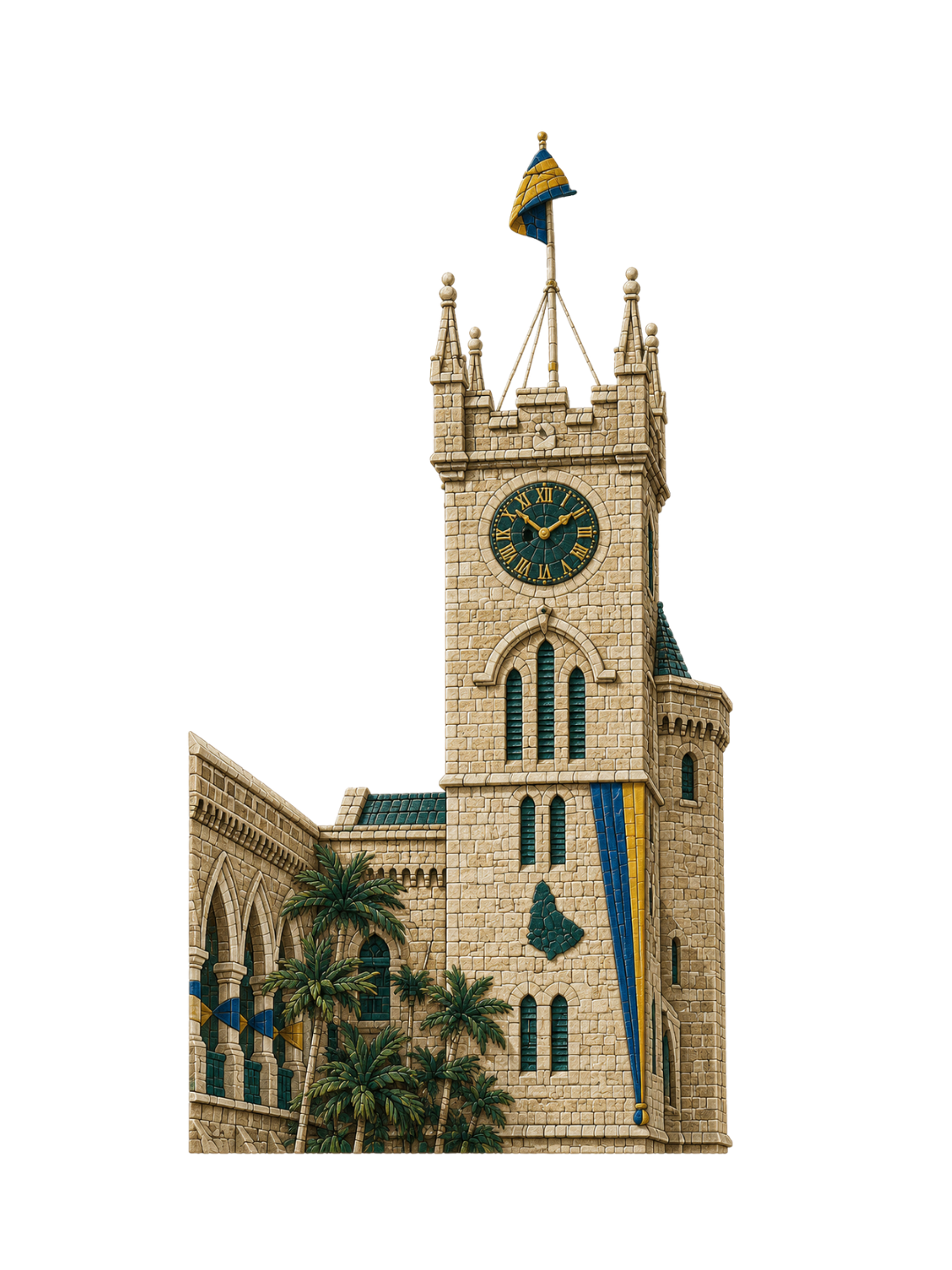
Five days in Barbados each year, three of them where the people who steer law and policy meet as equals and decide things. The most visible thing the Institute does, and the least of what it does.
Explore the Summit →
The months in between: closed salons, institutional workshops, and sessions for the next generation. They lay groundwork a single gathering cannot, and widen the circle without thinning it.
See the Activations →The Summit is where the Institute gathers. The Activations are how it keeps working. The Institute is what makes both worth building.
The Summit will end. This will not.
The Summit is the first thing the Institute does in public. It is not the last, and it is not the point. The point is a council that stays with the questions deciding where law and policy go next, long after everyone has flown home.
Read the Charter →